
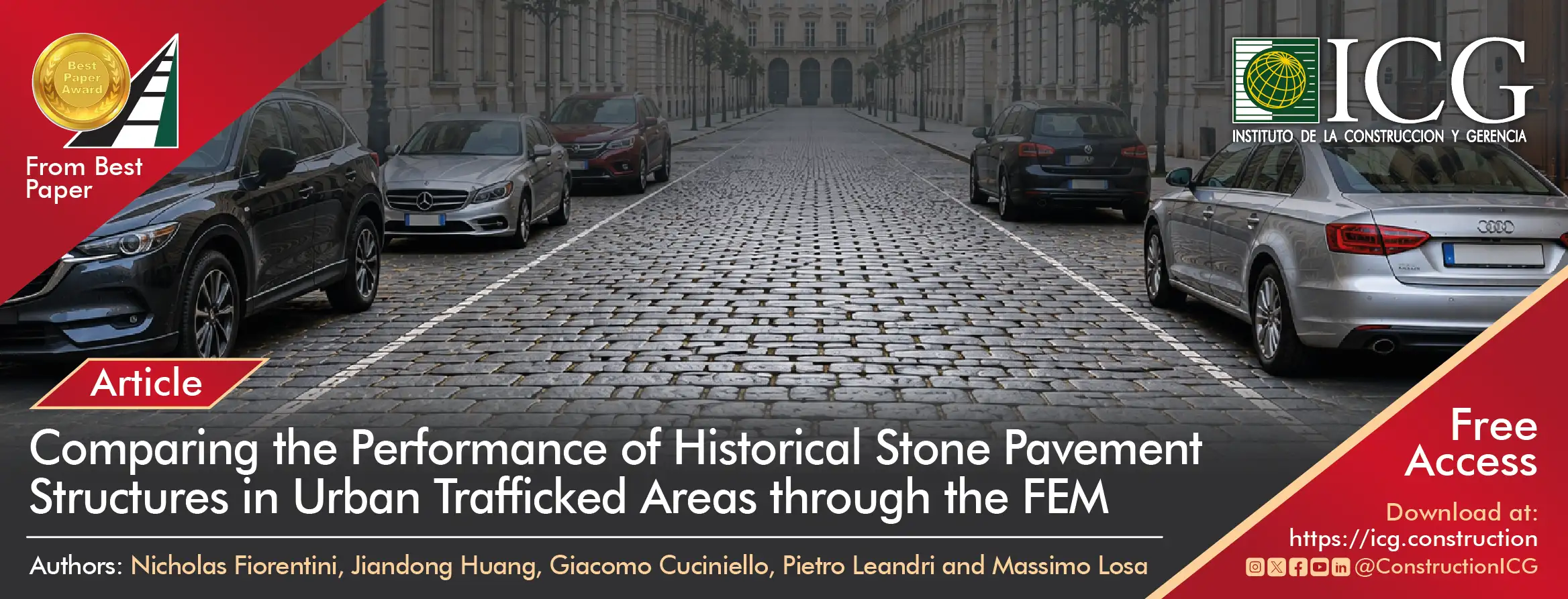
Comparing the Performance of Historical and Regular Stone Pavement Structures in Urban Trafficked Areas through the Finite Element Method (FEM)

Abstract: Stone pavement structures (SPS), also known as stone roads or stone-paved roads, are
road pavements constructed using stones as the primary surface material. Different types of SPS
exist; historically, irregular-shaped stones with downward protrusions have been often exploited
since regular-shaped stones were difficult to be produced. More recently, regular cuboid stones can
be also used. Accordingly, in new construction and renovations of SPS, pavement designers must
take an essential decision concerning the adoption of historical or regular stones. Nonetheless, it is
often confusing which of the two types of stones should be employed, considering that historical and
regular SPS follow the same theory and pavement design methods. Therefore, a comparison between
the performance of these two types of SPS is required to support their design and maintenance.
Moreover, SPS are limitedly investigated and, to the best of our knowledge, there are no research
contributions that address this specific task. Accordingly, in the present study, after conducting a
laboratory characterization and in situ structural survey by Falling Weight Deflectometer (FWD)
on a SPS, a comparative analysis based on the Finite Element Method (FEM) was carried out for
investigating the structural performance of the historical (H-SPS) and regular SPS (R-SPS) in urban
trafficked areas, where SPS must withstand heavy traffic loads. Specifically, considering both typologies
of SPS, the paper aims to model and investigate: (a) the mechanical behavior under loading
(displacements, stress, and strain distribution), (b) failure criteria (stone warpage and separation
between the stones and the mortar joint), (c) the joint efficiency between stones, and (d) to which
extent the road subgrade stiffness may influence the performance of SPS. In addition to the pavement
design perspective, the research also provides a short glance at the strengths and weaknesses of R-SPS
and H-SPS from other sides, such as functionality, ease of maintenance, construction techniques, and
cultural and historical values.

Keywords: stone pavement structures; historical pavements; finite element method; FEM; simulation;
mechanical behavior; pavement design

A video lecture is available for this article, which you can watch at the virtual 5-ICTI Conference.
You can purchase your access here.

Please note: This text is an abstract/summary. The complete original paper is available for download via the links at the bottom of this page.
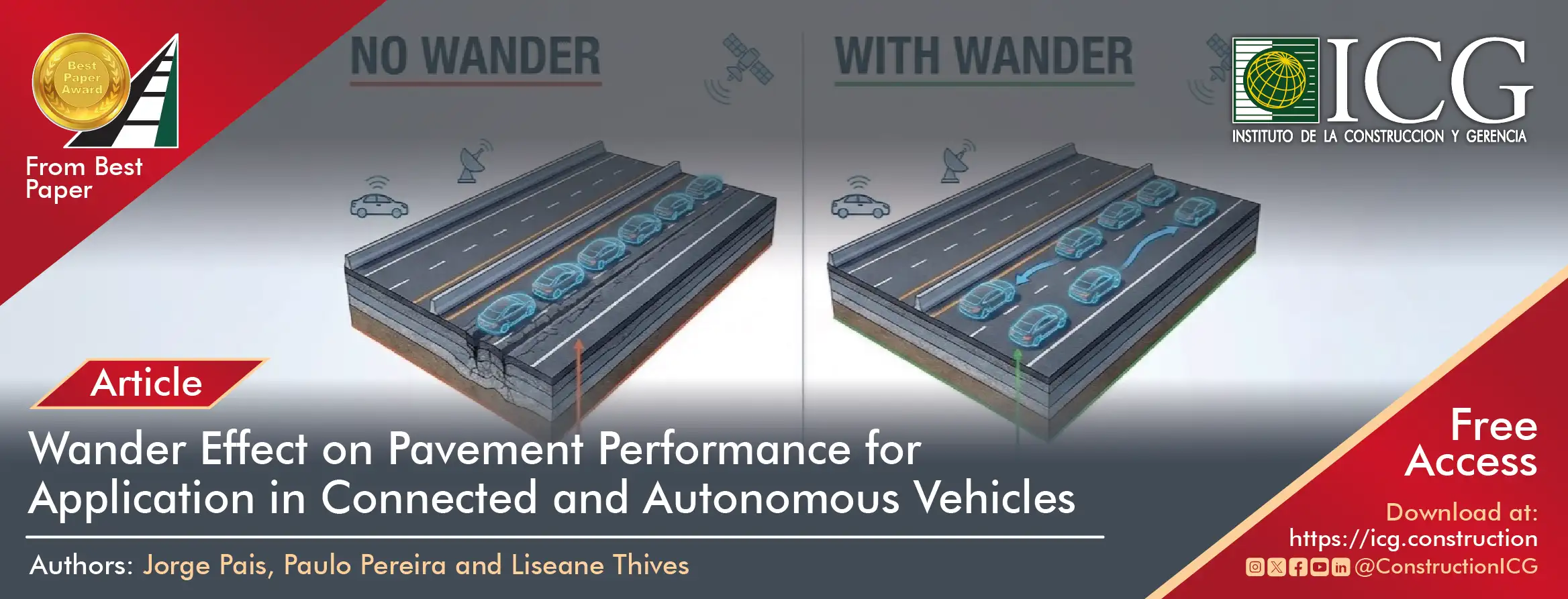
Wander Effect on Pavement Performance for Application in Connected and Autonomous Vehicles

Abstract: Connected and Autonomous Vehicles (CAV) will change how road engineers design road
pavements because they can position themselves within a traffic lane, keeping their position in the
lane more precisely than human-driven vehicles. These vehicles will have lower lateral wandering,
which can induce more damage to pavements, such as cracking and permanent deformation, than
the conventional vehicles, with consequences for the infrastructures due to the increased cracking
and reduced safety due to the rutting. Thus, it is essential to assess the wander effect on pavement
performance to define policies for its implementation on CAV. This paper studies the impact of
the lateral wander of the traffic on pavement performance, considering its fatigue and permanent
deformation resistance. This impact can be used to define limits for the wander to minimize distresses
on the pavement. The results of this study allow us to conclude that for a pavement with a 10 cm
asphalt layer, the wander effect is more significant for fatigue life. A pavement life increase of 20%
was observed for a wander of 0.2 m, while for 0.6 m, the fatigue life can increase up to 48%. For the
permanent deformation, a pavement life increase of 2% for a wander of 0.2 m was observed, but for
0.6 m, the pavement life can be increased up to 34%.

Keywords: road pavements; connected and autonomous vehicles; wander; pavement performance

A video lecture is available for this article, which you can watch at the virtual 5-ICTI Conference.
You can purchase your access here.

Please note: This text is an abstract/summary. The complete original paper is available for download via the links at the bottom of this page.

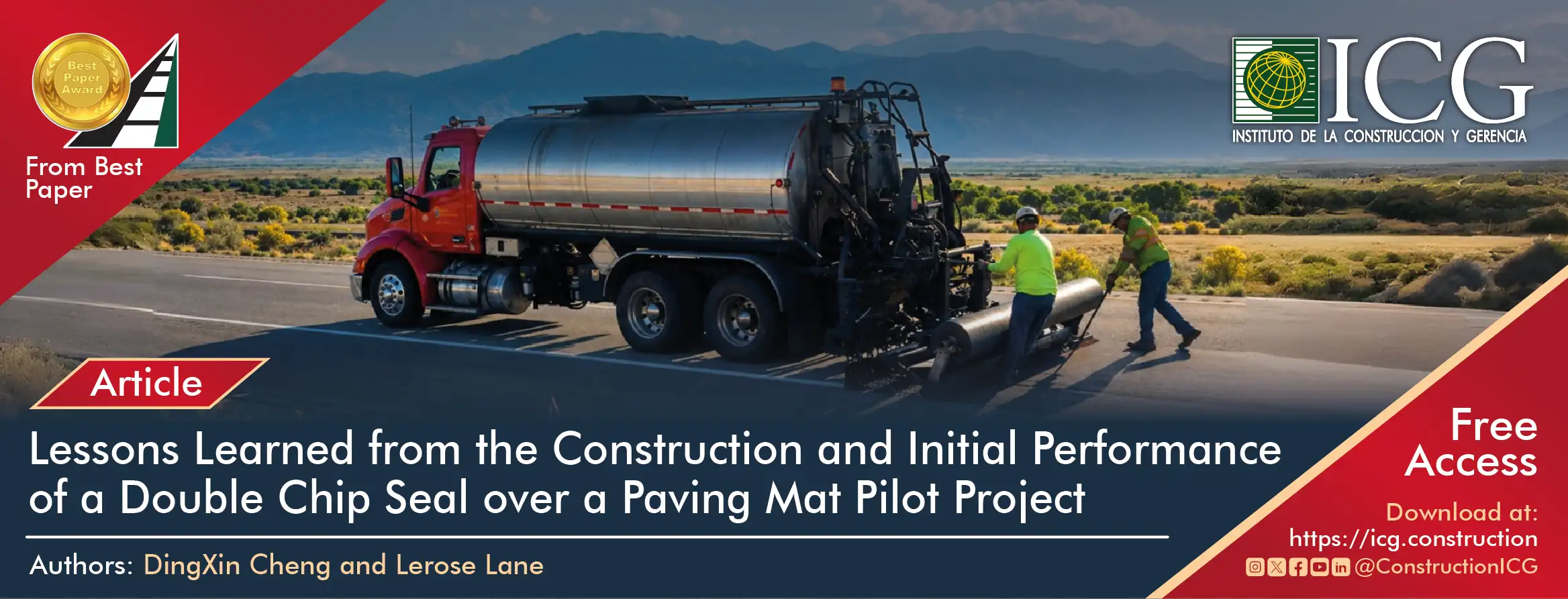
Lessons Learned from the Construction and Initial Performance of a Double Chip Seal over a Paving Mat Pilot Project

Abstract: Single chip seals are used by many agencies to maintain or preserve their roadways.
While the construction and performance of single chip seals can be easily found from literature, the
construction of double chip seals with and without paving fabric or paving mats is still not common.
This paper investigates four double chip seal strategies used in a pilot project constructed on US 395
in Inyo County, California, by Caltrans. Within the double chip seal project limits, eight Performance
Evaluation Sections (PESs) using four treatment strategies were established for detailed performance
monitoring and evaluation: 1—a 3/8-inch asphalt rubber chip seal followed by a 1/4-inch PME chip
seal without pavement-reinforcing fabric (PRF) or a paving mat as a control section; 2—a 3/8-inch
PME chip seal over PRF, followed by a 1/4-inch PME chip seal; 3—a 3/8-inch PME chip seal over
a paving mat, followed by a 1/4-inch PME chip seal; and 4—an asphalt rubber 3/8-inch chip seal
over a paving mat, followed by a 1/4-inch PME chip seal. This pilot project was monitored during
construction and evaluated 1 year later to help identify any construction issues and was used to
improve the specifications and performance of Caltrans’ chip seals. This paper presents the initial
findings following construction, and the one-year performance of the pilot project and lessons learned.
The findings presented were accomplished by using these four treatment strategies on a highway
with a very adverse high desert climate type and high traffic volumes. Project reviews are also
planned for up to seven years to determine the long-term project performance.

Keywords: chip seals; double chip seals; asphalt rubber (type II); polymer-modified emulsion (PME);
pavement-reinforcing fabric (PRF); paving mat

A video lecture is available for this article, which you can watch at the virtual 5-ICTI Conference.
You can purchase your access here.

Please note: This text is an abstract/summary. The complete original paper is available for download via the links at the bottom of this page.
Properties of Hot Mix Asphalt (HMA) with Several Contents of Recycled Concrete Aggregate (RCA)

Abstract: Continuous research efforts have been developed in the literature to raise the sustainability components of the road infrastructure industry, i.e., reduce potential contaminants and augment financial profitability. In this regard, this investigation aims to explore the feasibility of producing Hot Mix Asphalt (HMA) with the inclusion of Recycled Concrete Aggregate (RCA) as a partial substitute for coarse Natural Aggregates (NAs). Thus, four different HMAs were considered, namely HMAs with coarse RCA contents of 0, 15, 30, and 45%. Specifically, the mechanical and sustainability properties of the asphalt mixtures were determined. On the one hand, the Marshall design parameters, resilient modulus, moisture susceptibility, rutting resistance, and fatigue life were addressed as mechanical properties. Meanwhile, regarding the sustainability properties, the environmental impacts and production costs were estimated using the Life Cycle Assessment (LCA) and the Life Cycle Cost Analysis (LCCA) methodologies, respectively. Consequently, the following conclusions were obtained: (i) as the coarse RCA content increases, the mechanical behavior of the HMA progressively deteriorates; (ii) this decrease in mechanical performance is acceptable up to a 15% RCA of coarse RCA, whereas for higher dosages this alteration is abrupt; and (iii) the RCA only generates sustainability benefits at a 15% replacement amount.

Keywords: Hot Mix Asphalt; Life Cycle Assessment; Life Cycle Cost Analysis; mechanical performance; pavement materials; Recycled Concrete Aggregate; sustainability

A video lecture is available for this article, which you can watch at the virtual 5-ICTI Conference.
You can purchase your access here.

Please note: This text is an abstract/summary. The complete original paper is available for download via the links at the bottom of this page.
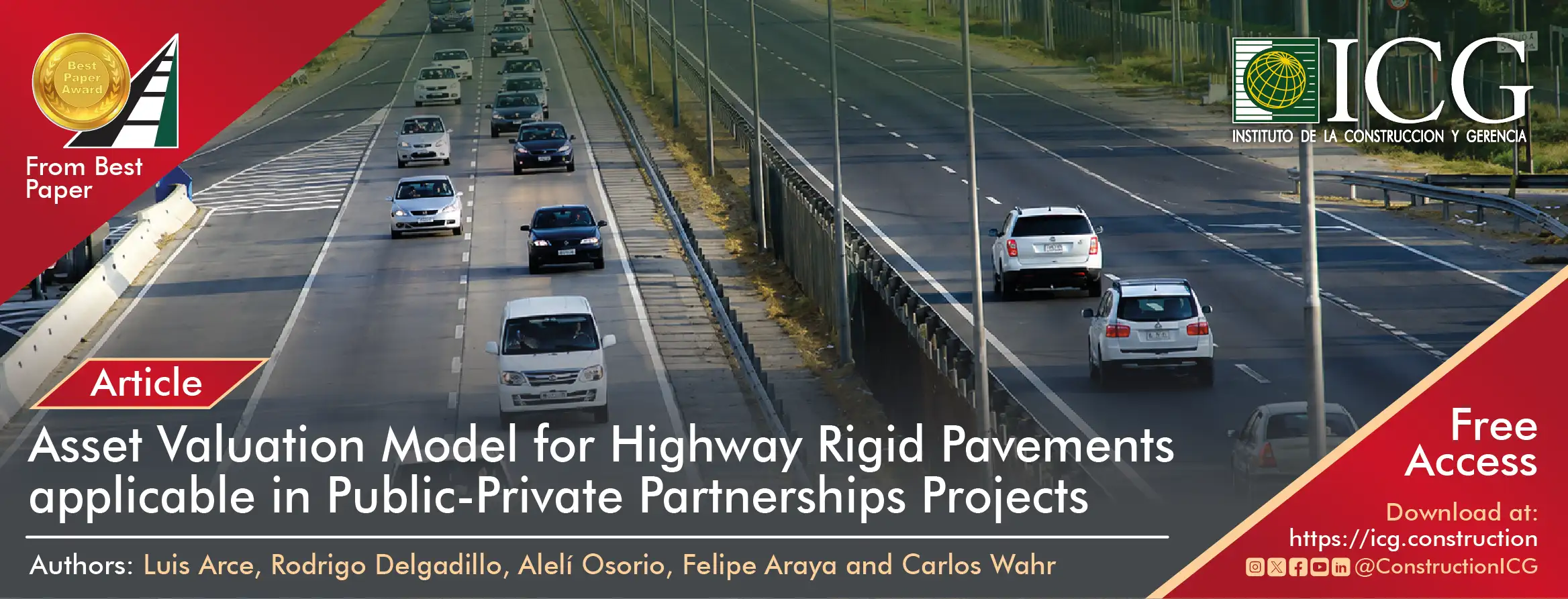
Asset Valuation Model for Highway Rigid Pavements applicable in Public-Private Partnerships Projects

Abstract: Recently, in Chile, infrastructure asset value has been incorporated into highway concession contracts. However, the current valuation model used for rigid pavements is not adapted to the standards and conditions of such projects. This study develops a valuation model for rigid pavements of interurban highway concessions and evaluates it in a case study. The proposed model captures the loss in asset value associated with the performance degradation over time, considering a typical Jointed Plain Concrete Pavement (JCPC) configuration. The value is calculated using performance indicators that represent the structural capacity and level of service provided to road users. The model represents a significant improvement compared to current asset valuation models used in highway concessions. It enables the public agency to objectively evaluate the preservation of asset value carried out by the private partner during the concession. Additionally, it could also be used as a tool to establish payments between infrastructure stakeholders. Some of the concepts applied could also be relevant for other highway assets existing in Public–Private Partnership (PPP) projects.

Keywords: highway asset management; highway asset valuation; infrastructure asset; rigid pavement; pavement performance; public–private partnership

A video lecture is available for this article, which you can watch at the virtual 5-ICTI Conference.
You can purchase your access here.

Please note: This text is an abstract/summary. The complete original paper is available for download via the links at the bottom of this page.
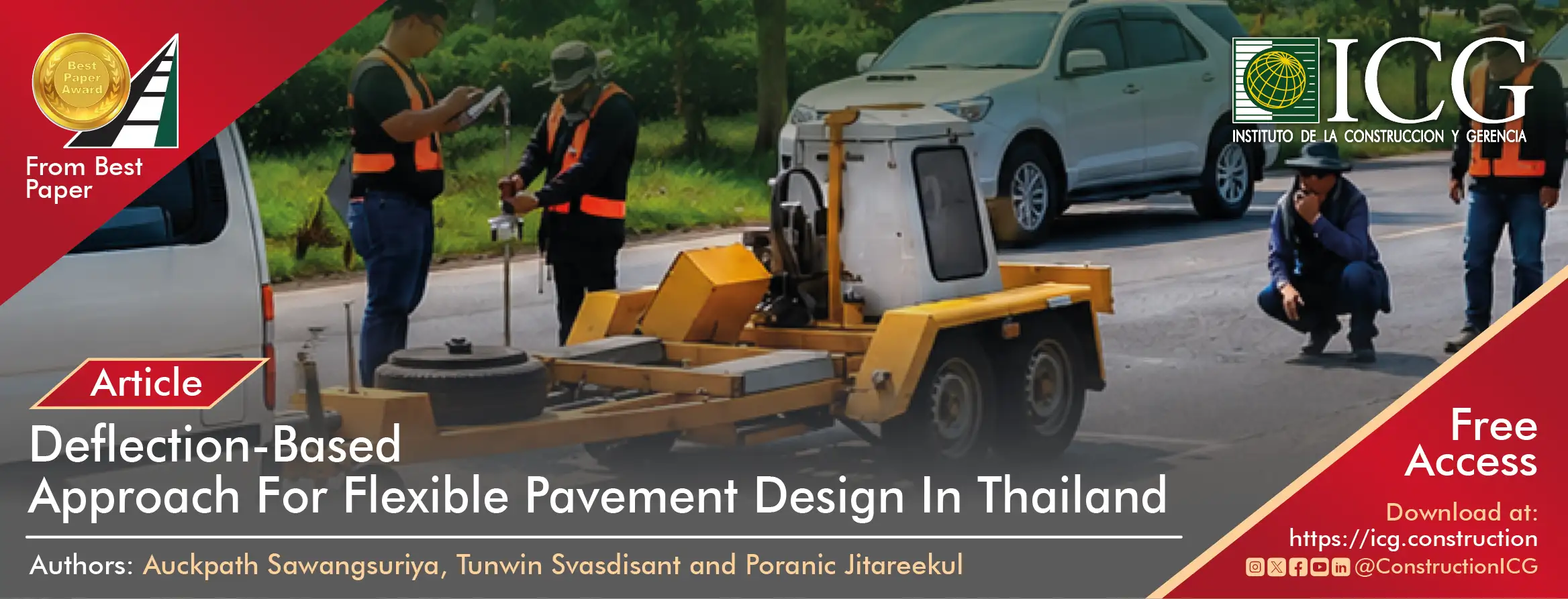
Deflection-Based Approach For Flexible Pavement Design In Thailand

Abstract: The Department of Highways (DOH), Thailand, has adopted both empirical and mechanistic approaches for flexible pavement analysis and design. Recently, the deflection-based design approach has been comprehensively reviewed by the DOH for the possible adoption of national design standards and practices. One of the key reasons is that Thailand’s road authorities, i.e., the DOH and the Department of Rural Roads (DRR), have considered the falling weight deflectometer (FWD) for the new construction and rehabilitation of road pavements. In addition, the FWD is widely accepted as the non-destructive test for deflection measurement and structural capacity evaluation. Ultimately, the implication of FWD deflections for in-house pavement analysis and design shall be developed and proposed to Thailand’s road authorities. Therefore, this study presents the deflection-based approach of flexible pavement design in Thailand. The FWD and a standard Thai truck were selected as the main loading applications in this study. A typical FWD loading stress of 700–800 kPa was practically adopted by the DOH and compared with a standard 10-wheel 25-ton truck with a tandem axle-dual wheel configuration with a tire pressure of 690 kPa. The layered elastic analysis was performed to calculate the pavement responses. The results suggest that the flexible pavement design based on a deflection-based approach is simple, practical, and conservative.

Keywords: civil infrastructure systems; management humanistic approach; smart city; sustainability;
5‑dimensional model; BIM‑CIM; digital twin; Peru

A video lecture is available for this article, which you can watch at the virtual 5-ICTI Conference.
You can purchase your access here.

Please note: This text is an abstract/summary. The complete original paper is available for download via the links at the bottom of this page.
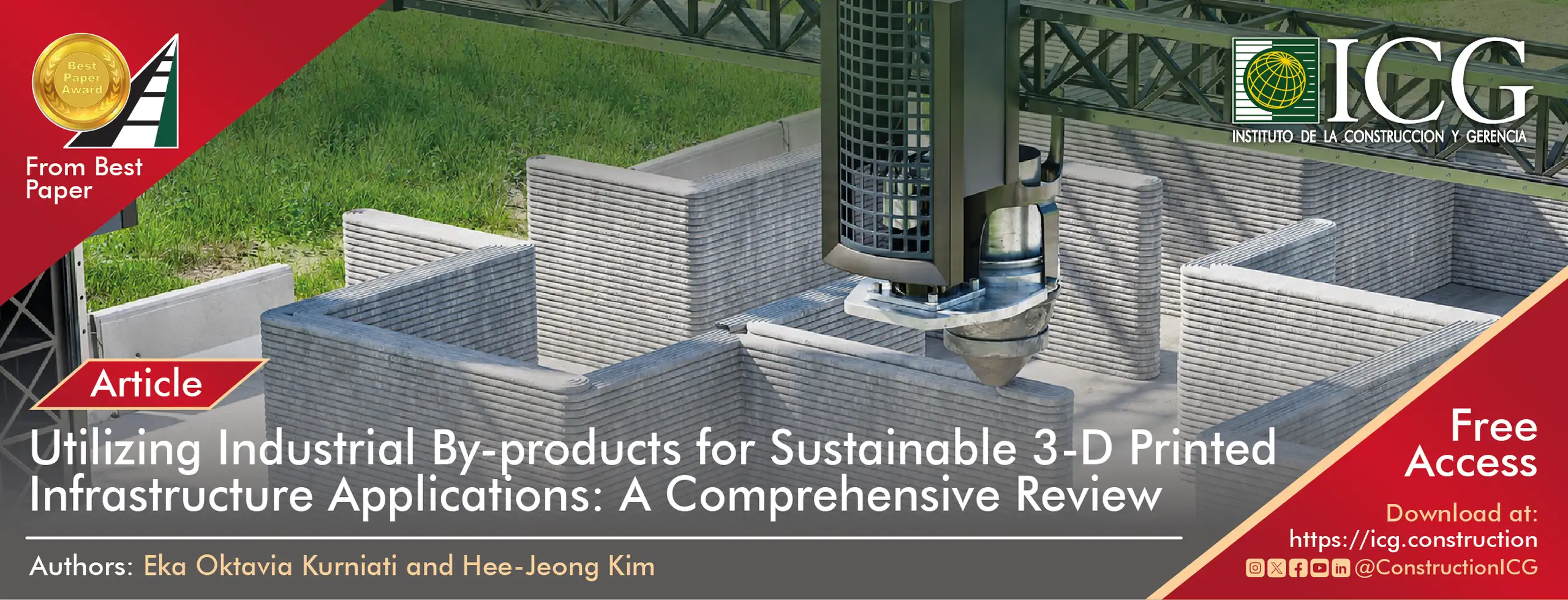
Utilizing Industrial By-products for Sustainable 3-D Printed Infrastructure Applications: A Comprehensive Review

Abstract: Industrial secondary products (e.g., fly ash, blast furnace slag, and silica fume) have found extensive application as alternative construction materials in conventional manufacturing methods to reduce carbon emissions due to cement usage and solve the waste management problem. To date, additive manufacturing or 3D printing has been massively developed for every material, including cement-based materials. Some possibilities have arisen to incorporate industrial wastes in cement mixtures in 3D printing applications. However, a comprehensive study about fly ash (FA), ground granulated blast-furnace slag (GGBFS), and silica fume (SF) usage in 3D-printed materials needs to be conducted. This paper shows that some aspects of 3D printing, such as printability, buildability, and rheological properties, need to be considered, and waste materials affect these fresh mixture properties. Applying waste materials as supplementary cementitious materials also gives different mechanical properties and durability performances. Furthermore, the environmental and economic benefits of 3D-printed and conventional materials are compared. The results show that 3D printing methods can enhance the environmental and economic benefits while maintaining the performance of materials created using traditional methods. Studying industrial waste application in 3D printing has become a promising way to develop sustainable materials in this digitalization era.

Keywords: fly ash; blast furnace slag; silica fume; 3D printing

A video lecture is available for this article, which you can watch at the virtual 5-ICTI Conference.
You can purchase your access here.

Please note: This text is an abstract/summary. The complete original paper is available for download via the links at the bottom of this page.
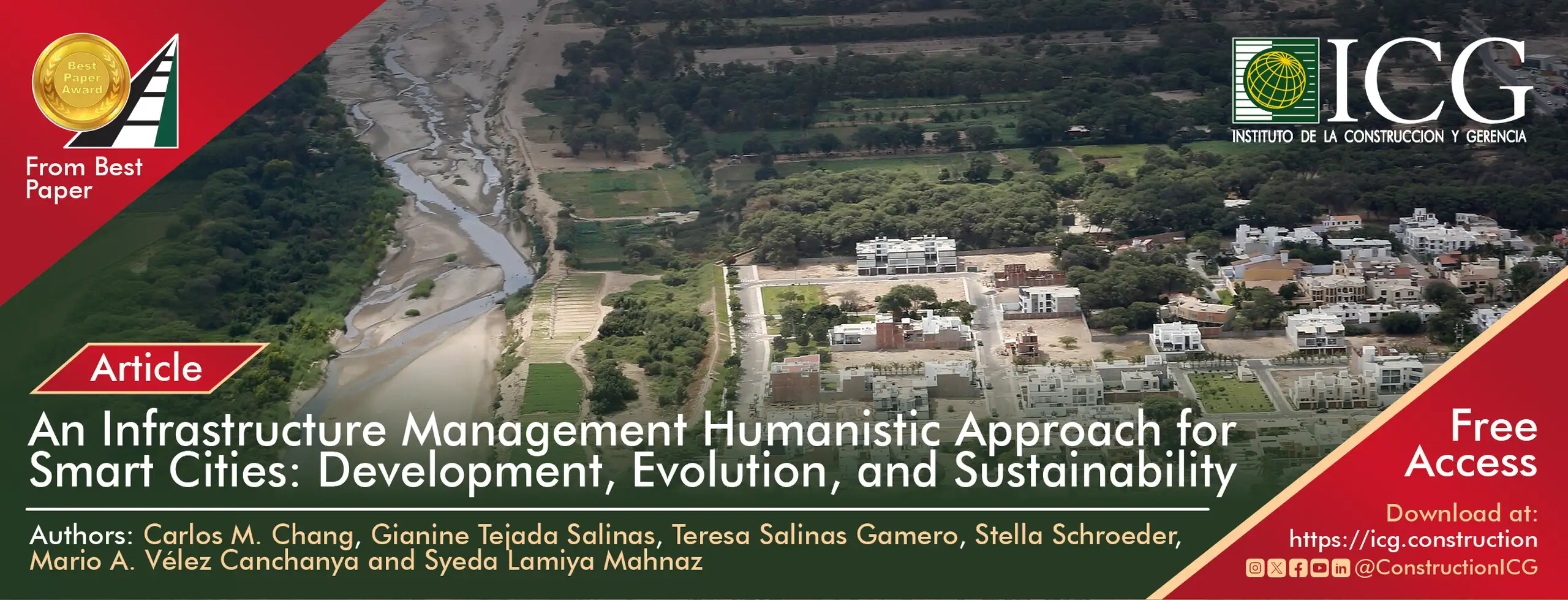
An Infrastructure Management Humanistic Approach for Smart Cities: Development, Evolution, and Sustainability

Abstract: Over the next decades, people will continue moving to urban areas all over the world, increasing infrastructure needs to satisfy economic, environmental, and social demands. The connection between civil urban infrastructure and smart cities is strong due to the common goal of fulfilling public service demands. Infrastructure management contributes to the development, evolution, and sustainability of smart cities. The main problem with traditional approaches to the development, evolution, and sustainability of smart cities is the lack of a holistic, integrated vision of infrastructure management. The main objective of this research is to introduce an infrastructure management humanistic approach with a smart city conceptual model that also considers an educational perspective. A mixed research methodology that combines quantitative and qualitative approaches was used, applying inductive‑deductive tools. The paper concludes with the development of an infrastructure management framework for smart cities with five dimensions: (1) Environmental, (2) financial‑economic, (3) political‑governance, (4) social‑people, and (5) technological. Two case studies for the cities of Lima and Piura in PerĆŗ illustrate how to incorporate this framework into practice. The research products are relevant because they foster an inclusive better quality of life for all citizens by preserving civil infrastructure systems.

Keywords: civil infrastructure systems; management humanistic approach; smart city; sustainability;
5‑dimensional model; BIM‑CIM; digital twin; Peru

A video lecture is available for this article, which you can watch at the virtual 5-ICTI Conference.
You can purchase your access here.

Please note: This text is an abstract/summary. The complete original paper is available for download via the links at the bottom of this page.

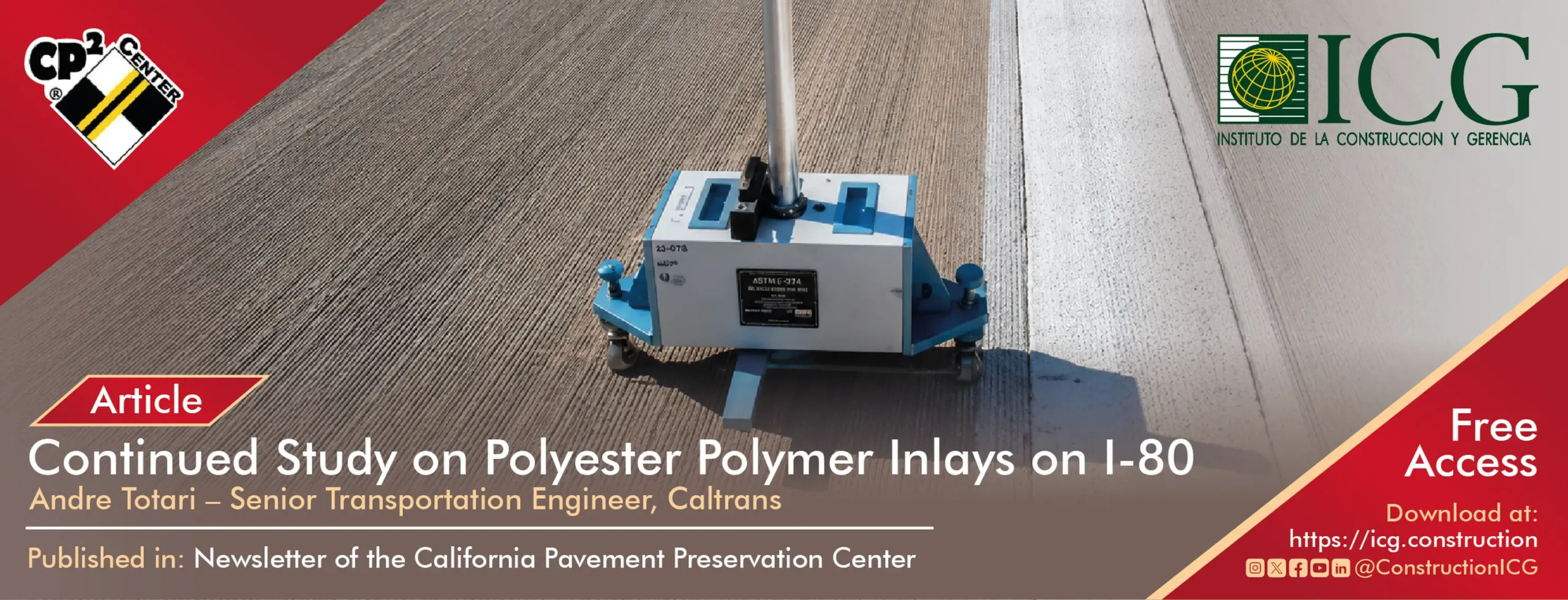
Cover of the article 'Continued Study on Polyester Polymer Inlays on I-80' by Andre Totari, published by the California Pavement Preservation Center and shared by ICG.

Continued Study on Polyester Polymer Inlays on I-80

Interstate 80 (I-80) in California faces severe concrete pavement wear due to heavy truck traffic and winter tire chain use, especially through the Sierra Nevada mountain range. This damage, called ā€œwear depth,ā€ differs from typical asphalt rutting, and has been difficult to control with previous repair methods.

In 2023, Caltrans initiated a pilot project near Donner Summit to evaluate polyester polymer concrete (PPC) inlays as a more durable pavement solution for high-wear conditions. These resin-based materials offer high strength, rapid curing, and strong resistance to cracking and extreme weather, making them well-suited for extending concrete pavement life without full reconstruction.

The project consists of multiple test sections, including control sections built with standard materials and experimental sections incorporating alternative formulations. The experimental approaches included the use of bauxite aggregate (selected for its superior hardness and finer aggregate size) blended with standard polyester resin, as well as an epoxy-based material known as Fastrac HPC. Data collection measured pavement wear depth using Face Dipstick Profiler

Please note: This text is an abstract/summary. The complete original newsletter is available for download via the links at the bottom of this page.